Tell the clinic about dryness before you book LASIK in Korea. Ask for an ocular-surface assessment, an explanation of any treatment and a separate decision about surgical suitability. Dry-eye treatment does not automatically make you eligible for LASIK. Keep an examination-only trip or continued care in the United States among your options. [1, 2]

Start by separating two goals
Your first goal may be comfortable eyes during a normal workday. Your second may be less dependence on glasses. Write them as separate goals in the message to the clinic. Ask whether the proposed plan addresses both, or whether one needs attention before the other can be considered. This prevents a conversation about symptoms from turning immediately into a discussion of a surgery package. If you would still want an assessment even when surgery is not possible, tell the clinic that. An examination can be useful without ending in an operation. A consultation that explains why you should wait has answered a meaningful question, even if it changes the holiday you had imagined.
Describe symptoms without diagnosing yourself
The National Eye Institute describes dry eye as a problem with tear quantity or function, with symptoms that can include irritation and blurred vision. Similar everyday complaints do not establish the diagnosis on their own. [1] Prepare a short description of when discomfort occurs: on waking, during contact-lens wear, after computer work or late in the day. Note whether one eye is affected more than the other. Bring the names of drops you already use and say whether they help. Instead of telling the surgeon you need IPL or another named treatment, ask what the symptoms and examination suggest. This gives the consultation room to identify a different explanation or more than one contributing problem.
Make your US records useful
Ask your current eye-care office for relevant examination notes, prescriptions and records of previous treatment. A list of product names is more useful than a photograph of several bottles with no explanation. Record which drops were prescribed, which were bought over the counter and what instructions you received. Include prior LASIK, contact-lens problems and medical conditions that your doctor considers relevant. Send records only through the clinic’s designated channel. Do not discontinue a prescription medicine because you suspect it causes dryness; ask the clinician responsible for it. Tell the Korean team what information is missing rather than filling gaps from memory. The treating doctor still decides what testing is needed in person.
Ask what the examination is intended to establish
A dry-eye assessment can examine tears and eyelid structure; the NEI describes checking tear amount, how quickly tears dry and the eyelids. [1] Ask the clinician to explain which findings matter in your case and how they affect the proposed procedure. You do not need to demand every available machine or memorize a numerical cutoff. A useful explanation connects a finding to a decision: whether further assessment, treatment or repeat measurements are needed. If you receive a printout, ask for a brief English summary rather than assuming every colored graph is self-explanatory. Keep that summary with your records so your US clinician can understand the reasoning, not simply see that many tests were performed.
Understand why LASIK changes the discussion
The FDA identifies dry eyes as a condition LASIK can aggravate and describes the possibility of severe or persistent symptoms after surgery. [2, 3] That does not establish that every person who sometimes feels dry must avoid all vision correction. It means your symptoms deserve a direct discussion before you consent. Ask how the surgeon weighs your examination, current symptoms and goals, and whether postponing surgery would change the decision. Avoid asking only which technique has the least dryness in advertising. A different procedure name is not individual clearance. Have the doctor explain the options, their limitations and what remains uncertain for your eyes, including the possibility that glasses remain the preferable choice.
Keep treatment and surgical clearance separate
If treatment is recommended, ask what response the clinician wants to see and how it will be reassessed. Request the next decision point in plain language: a review appointment, repeat measurements, a revised diagnosis or a discussion of alternatives. Do not treat the last session in a purchased package as the date you automatically become ready for surgery. Ask what happens if the initial plan does not help enough, and whether the clinic would recommend continuing care at home. Planning this before payment reduces pressure to proceed because you have already invested time and money. The appropriate sequence is something the examining clinician determines; this guide cannot assign a universal waiting period.
Compare an IPL offer with a diagnosis-led plan
Seoul BGSS publishes a dry-eye service that starts with diagnostic testing and describes several possible treatments. This confirms a service to ask about, not that any particular device is needed for you. [5] If a clinic proposes IPL, ask which finding it targets, what alternatives exist, what adverse effects and contraindications need discussion, and how benefit will be assessed. Request the expected number of visits and the plan if symptoms persist. Separate a recommendation from an optional add-on. You should understand why the clinician favors the approach before comparing prices. A package containing more procedures is not automatically a better match for an individual eye-surface problem.
Plan contact lenses around the actual assessment
Tell the clinic exactly what lenses you wear, including overnight reshaping lenses if relevant, and obtain its preparation instructions. Do not borrow another traveler’s lens-free timetable. Ask whether the first appointment is an initial consultation or the examination on which surgery would be planned. If the team may need repeat measurements, decide whether you can accommodate another visit before booking inflexible travel. Bring usable glasses and a spare pair if you have one. Our contact-lens preparation guide covers this logistical step separately. Here the key question is whether preparation and symptom assessment leave enough room for a reliable decision, including a decision not to operate.
Choose a relevant consultation, not a promised outcome
For a refractive assessment in Seoul, start with Jamsil Samsung Eye Clinic. Its official biography for Dr. Cha Deok Sun, in English lists cornea and cataract fellowship training and a vision-correction focus. Ask whether he or another clinician would assess how your symptoms affect surgery planning; the biography does not establish a particular dry-eye device service. [4] Next consider Seoul BGSS Eye Clinic and its official dry-eye service, in English. Confirm the examining doctor and available care directly.
Decide what can reasonably be done before travel
Consider arranging an initial US assessment before committing to international treatment, particularly if symptoms are currently disrupting everyday activities. Ask the Korean clinic whether reviewing those records can clarify the purpose of a visit without pretending to settle eligibility remotely. A sensible travel decision might be a consultation-only visit, a longer interval for treatment and review, or continuing locally until the situation is clearer. Compare these paths against your available leave, family obligations and ability to attend follow-up. Do not make the lowest possible number of nights the medical target. If the clinical plan cannot fit your real constraints, changing the trip is a legitimate outcome of the planning process.
Budget for decisions, including postponement
Request separate estimates for the consultation, proposed dry-eye care, reassessment and any later vision-correction procedure. Ask which charges remain payable if surgery is postponed or declined. Keep the clinic’s quote in Korean won and your own travel budget in US dollars, with room for exchange and payment fees rather than treating a conversion as a guaranteed total. Ask your insurer about your actual policy and planned services; neither a clinic estimate nor an educational article establishes coverage. Include US visits after return. This is a practical exercise in preventing surprises, not evidence that overseas treatment is cheaper. Use the cost-comparison guide once the clinical options are sufficiently clear to compare.
Arrange continuity before leaving the United States
Identify an eye-care professional at home who is willing to review your symptoms or postoperative course, and ask what records they need. Request the Korean diagnosis, test summary, proposed treatment, medication names and review plan in English. Clarify who answers routine questions and where to obtain an urgent examination while in Korea. A message sent across time zones is not a substitute for an examination when symptoms require one. If the Korean team changes the plan, send the updated record to the US clinician rather than relying on the original booking summary. Continuity is particularly useful when treatment requires reassessment; the person seeing you next should know what the previous clinician was trying to achieve.
Use a short decision checklist before consenting
Before you decide, check that you can explain your diagnosis, the purpose of the proposed treatment, the alternatives and the remaining uncertainty in your own words. Ask for more explanation if you can name a device but cannot explain why it is proposed. Confirm who performs each part of care and whether the surgeon has discussed suitability with you directly. Keep copies of consent information and ask for time to read it. Do not let a departure date or deposit answer a clinical question. The useful endpoint is a plan you understand and can follow, whether that means surgery later, further assessment, a different approach or continued use of glasses.
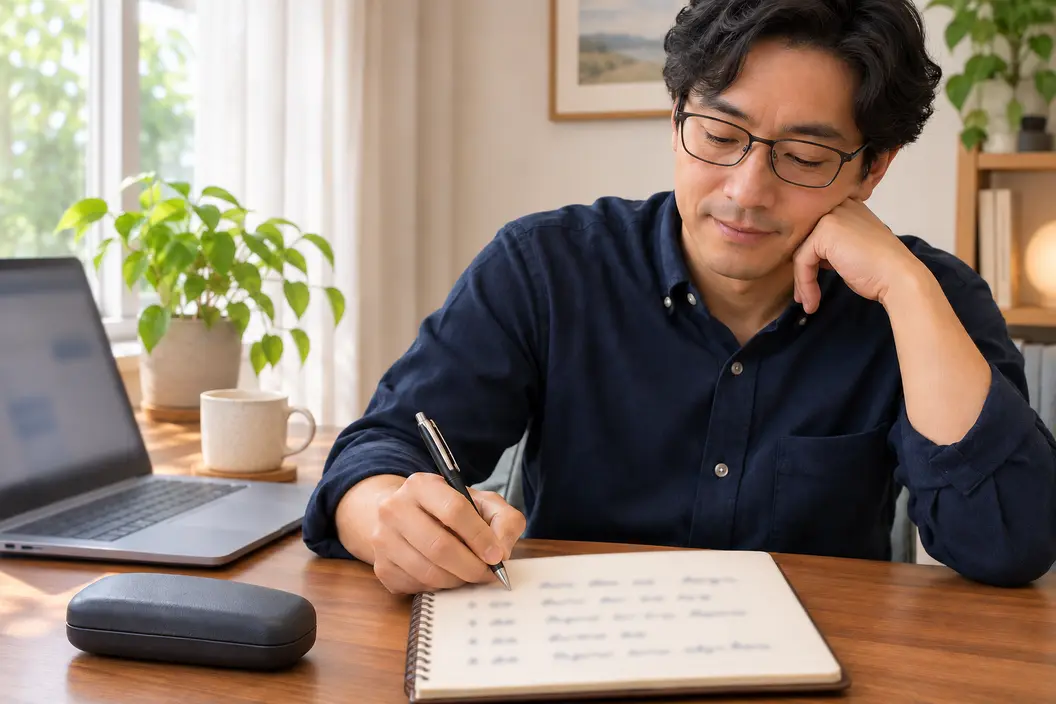
Turn a symptom diary into a better consultation
Tell the clinic exactly which contact lenses you wear before setting a screening date. Ask for written instructions for your lens type, then record the last day you wore them. If you wore them again, tell the person taking the measurements.
A short, factual diary can make “my eyes feel dry” easier to discuss. For several ordinary days before your appointment, note the activity, approximate time, symptoms and what you did next. Keep it simple: “After two hours at my desk, both eyes felt gritty; I used my usual prescribed drops.” Write down days that felt comfortable too. The aim is to describe your normal pattern, not to produce a score or prove that you need a particular treatment.
Include contact-lens use, screen-heavy work and any changes in your routine. Photograph the packaging of the drops you use so the clinician can identify the product, and note how often you actually use it. Do not increase, stop or swap prescribed medicines just to create a cleaner diary. The National Eye Institute’s dry-eye overview explains that symptoms and examination findings both matter when assessing the tear film and eyelids.
At the consultation, choose the entry that bothers you most and ask what the examination suggests about it. Then agree on the next decision: what treatment, if any, is proposed; what change will be reassessed; and who will review it if you return to the United States. A diary does not establish surgical readiness. The FDA identifies dry eyes as a condition LASIK can aggravate, so ask the surgeon to address that risk directly even if the symptoms improve.
A relevant clinic to ask
Seoul BGSS Eye Clinic describes diagnostic testing before selecting dry-eye treatment on its official dry-eye service page. Ask for an assessment-led appointment and bring your diary. The clinic’s service description supports making an inquiry; it does not establish which treatment you need or promise eligibility for LASIK.
Compare clinics and request a consultation
Listing order is not a clinical quality ranking. Confirm suitability, the treating doctor, interpretation and a written quote directly.
Jamsil Samsung Eye Clinic
Jamsil · Seoul
A family-oriented ophthalmology clinic listing refractive surgery, lens implantation, cataract care, and dry-eye and tear-duct services.
Read the clinic profileVisit the official clinic websiteSeoul BGSS Eye Clinic
Seoul
A vision-correction clinic whose website highlights SMILE, SMILE Pro, and implantable collamer lens procedures.
Read the clinic profileVisit the official clinic websitePatient questions
Can dry-eye treatment guarantee that I can have LASIK?
No. Treatment and LASIK eligibility are separate decisions. Ask what the examination found, how response will be assessed and whether other factors affect suitability. Do not regard a completed treatment package as surgical clearance.
Should I book IPL before an eye examination in Korea?
Ask for assessment first. A named device does not establish the cause of your symptoms or the right treatment. Request the clinician’s reasoning, alternatives, expected visits and reassessment plan.
Is a consultation-only trip worthwhile?
It can be, if you understand its purpose and costs. Ask what information the visit can provide and what would remain unresolved. Compare that value with a local assessment before paying for travel.
What should I ask my US doctor before departure?
Ask which records to bring, whether they can provide follow-up and how to arrange a review if the Korean plan changes. Clarify charges and availability without assuming that every practice accepts care after surgery abroad.
Sources and editorial scope
- NEI: Dry Eye
https://www.nei.nih.gov/eye-health-information/eye-conditions-and-diseases/dry-eye - FDA: When is LASIK not for me?
https://www.fda.gov/medical-devices/lasik/when-lasik-not-me - FDA: LASIK risks and monovision
https://www.fda.gov/medical-devices/lasik/what-are-risks-and-how-can-i-find-right-doctor-me - Jamsil Samsung: Cha Deok Sun official biography
https://www.jamsilsamsungeyeclinic.com/doctors/deok-sun-cha - Seoul BGSS: Dry Eye Syndrome Treatment
https://www.seoulbgsseyeclinic.com/specialties/dry-eye-syndrome-treatment
Listing order is not a clinical quality ranking.
Information to help you prepare for a consultation. Your ophthalmologist determines the diagnosis, treatment options and follow-up after examining your eyes.