High myopia can increase the risk of retinal problems. Ask how the clinic will assess the retina before deciding on vision correction and how any findings would change the plan. New flashes, a sudden increase in floaters or a curtain-like shadow need urgent local assessment; do not wait for a flight or an overseas consultation. [1, 2]
Two questions a strong prescription cannot answer
Your glasses prescription describes the correction used to focus your vision. It does not replace an examination of the eye’s tissues or establish the explanation for every symptom. The National Eye Institute distinguishes the focusing problem of myopia from associated risks such as retinal detachment in people with severe myopia. [1] Ask the clinic to address both the potential to reduce dependence on glasses and the health of your retina. A useful written consultation summary should keep those conclusions separate. This is especially important if you hear that an operation can correct a large prescription: the size of the correction alone does not tell you that every part of the eye has been assessed or treated.
Make symptoms the first booking question
Tell the clinic and your local eye-care professional about any new visual symptoms before discussing elective treatment dates. A sudden increase in floaters, flashes or a dark curtain or shadow warrants immediate medical assessment, according to the NEI. [2] Do not wait for an international clinic to reply to a photograph or online form. Routine records review and emergency evaluation serve different purposes. If you are already being investigated, tell the Korean clinic that the diagnosis is unresolved. A refundable appointment may be rearranged; a symptom requiring prompt attention should not be managed by optimizing an itinerary. An article cannot determine whether what you see is harmless, and comparing clinics online cannot resolve that uncertainty.
Gather a history that goes beyond your latest glasses
Prepare previous prescriptions and relevant examination reports, but also list retinal tears, laser treatment, surgery, injections or other eye diagnoses you have been told about. Include approximate dates and which eye was affected. Ask your US office for the actual records when possible; a remembered phrase such as “thin retina” may be too imprecise to guide another clinician. Tell the team about significant eye injuries and family history of retinal detachment if known. Do not interpret missing records as proof that there was no problem. Explain what you know and what remains uncertain, then ask whether the clinic needs additional information before offering an appointment or choosing the appropriate specialist.
Ask who will evaluate the retina
A vision-correction consultation and a retinal consultation may answer different questions. Ask whether the surgeon performs the needed assessment, whether a retinal specialist should review your history, and how those clinicians communicate if they disagree about timing. Do not assume that an advertised list of examinations means that a particular specialist has reviewed your case. Request the clinician’s name and the purpose of the appointment. If the clinic recommends a referral elsewhere, ask how records and findings will return to the surgeon before a final decision. A referral is not a failure of the process; it can be the step that makes the eventual recommendation understandable and appropriately tailored.
Understand dilation and imaging without buying a test list
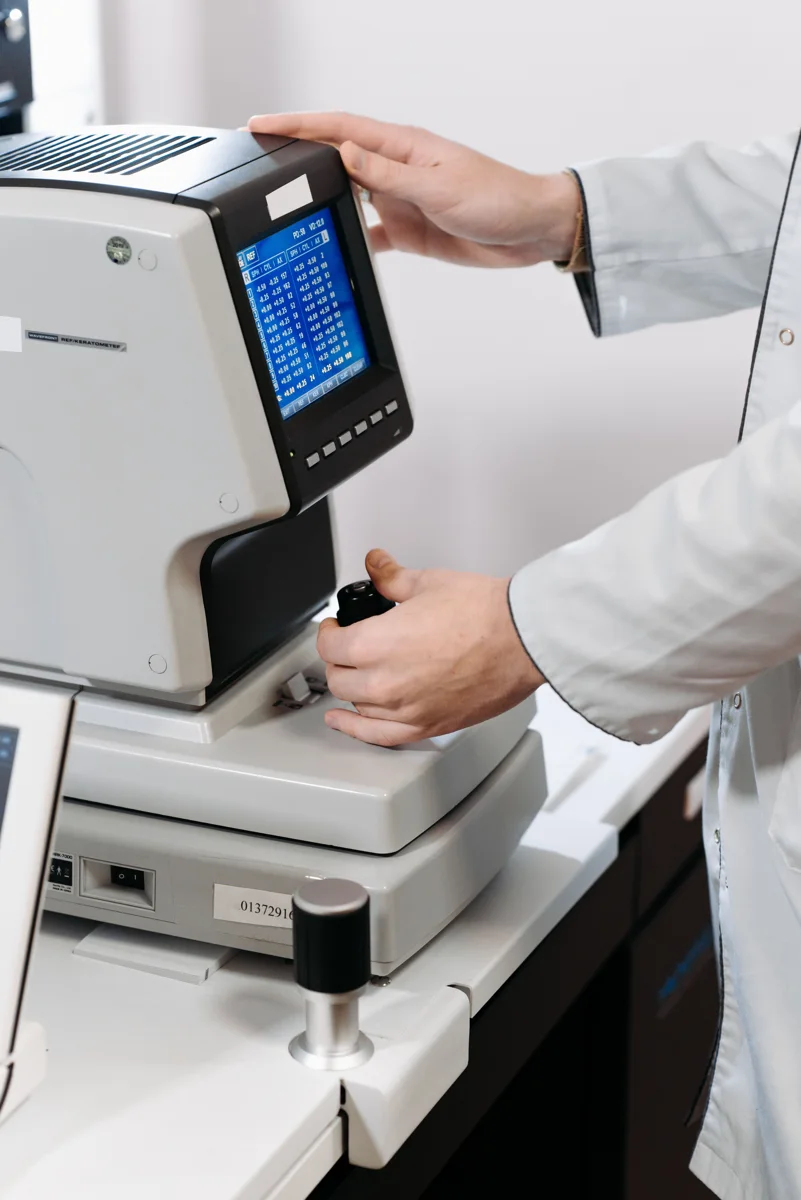
The NEI describes a dilated examination as a way to inspect the retina; additional imaging such as OCT or ultrasound may be used when more information is needed. [2] Ask what the clinician is looking for and what each proposed examination can contribute. Avoid treating the number of scans as a quality score. Request an explanation of findings that affect your decision and a copy of the relevant report. Ask the clinic how the examination may affect your plans immediately afterward, including transport and work. You do not need to decide which machine to buy access to; you need a clinician to explain whether the assessment is sufficient for the question being asked.
Request the actual finding, not just “passed”
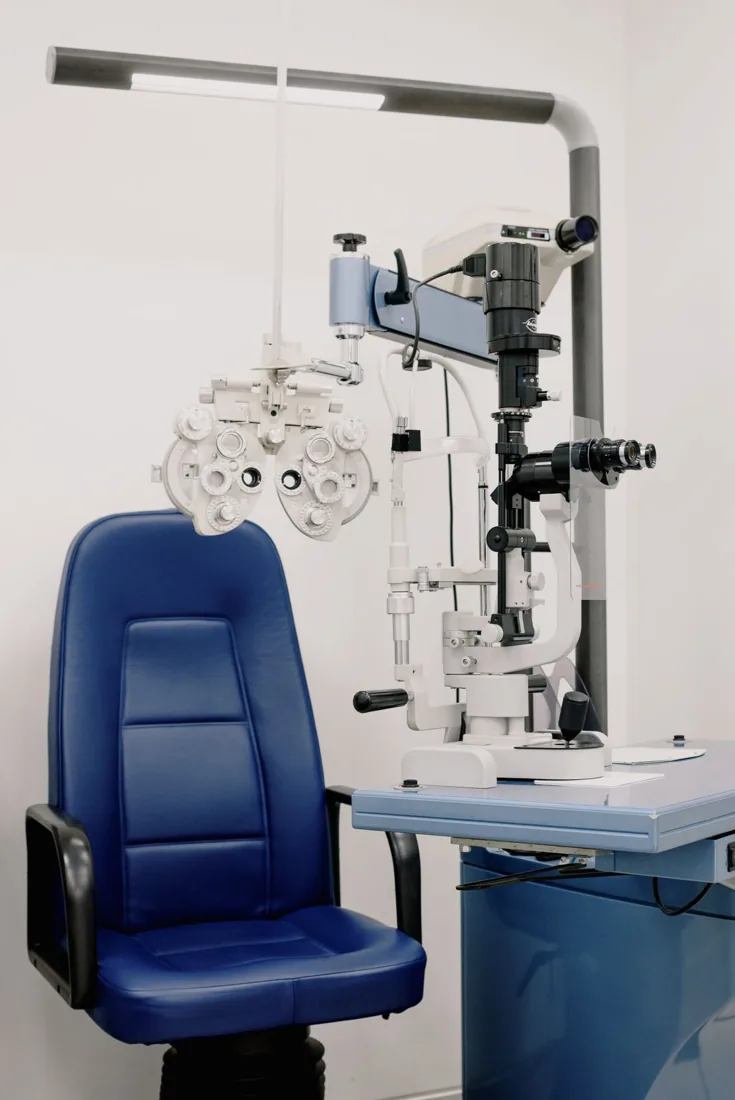
If the retina is described as suitable for the proposed next step, ask what that conclusion means and what it does not mean. A concise report should name relevant findings or say what was assessed, rather than merely containing a green checkmark. If something needs observation, ask who will observe it and when. If treatment is recommended, request the diagnosis, rationale and alternatives. Do not infer that every peripheral finding needs the same preventive procedure, or that a normal examination guarantees freedom from future problems. Your next question should be how the finding changes care now and follow-up later. This keeps the conversation grounded in the individual examination rather than a generic promise of clearance.
Separate optical correction from ongoing eye care
LASIK changes corneal focusing power; correcting blurred distance vision does not mean that every condition associated with the eye has been treated. The NEI describes laser surgery as changing the cornea and separately identifies retinal risk with high myopia. [1] Ask your surgeon to explain which problems the proposed procedure can address and which will still need monitoring. If an implanted lens is proposed, ask the same question rather than assuming that an internal device makes retinal assessment unnecessary. Keep your original prescription history in future medical records even if you later see well without glasses. A future clinician should understand the eye’s history rather than relying only on the prescription you happen to need after surgery.
Choose a consultation for your retinal concerns
For a retinal assessment in Seoul, consider Seoul BGSS Eye Clinic. Its official profile for Dr. Kun-Hae Kim, in English lists retina and macular disease management and prior retina fellowship experience. [3] Ask whether this doctor or another named retinal clinician would review your specific case and whether the consultation can coordinate with the refractive surgeon. Review the official information and request an assessment-oriented appointment.
Allow the finding to change the procedure plan
Before paying for an operation, ask what happens if the examination identifies a problem that needs further investigation or changes the risk discussion. Can the visit remain a consultation? Does a lens order wait until relevant reviews are complete? Who decides when the elective plan can be reconsidered? Get written answers to financial questions and clinical explanations from the responsible clinician. Do not ask for a guaranteed timetable merely to protect a flight booking. A revised plan may involve another appointment, local treatment, postponement or no refractive surgery. Knowing these possibilities in advance makes it easier to evaluate a recommendation without feeling compelled to proceed because travel has already begun.
Keep the Seoul and Busan decision practical
If you are comparing a Seoul consultation with a Busan itinerary, ask where the relevant clinician actually sees patients and where any subsequent review would occur. A shared brand or a clinic directory does not establish that your records or appointments automatically transfer between cities. Keep the assessment and any necessary follow-up geographically workable. Ask whether the planned visit is a one-time opinion or the start of an ongoing relationship, and choose accommodation around confirmed appointments. If a second opinion is useful, allow time to receive the report rather than scheduling both clinics as rushed shopping stops. Clinical reasoning is easier to compare when each doctor has the relevant records and you have time to understand the response.
Budget for an assessment pathway
Ask for consultation and investigation charges separately from a refractive procedure quote. Clarify what a retinal specialist visit would cost if it is not included, and how additional treatment or a changed plan would be billed. Keep travel and medical spending in separate sections of your budget. Ask your US insurer what your policy covers for assessment abroad and for care after you return; do not assume all visits are treated identically because they concern the same eye. The cost depends on the examinations and treatment recommended after assessment. The ICL comparison guide becomes useful only if an implanted lens remains a clinically supported option.
Plan a handover your US clinician can use
Before departure, identify a local eye-care professional who can review the relevant findings and arrange follow-up. Ask the Korean team for the diagnosis, examination summary, images or reports when available, any treatment details, medication instructions and the proposed review schedule. Keep the original files as well as a readable English explanation. Confirm how a US clinician can contact the Korean team if clarification is needed. Do not rely on a travel coordinator’s message as the complete clinical record. If the plan changes during your visit, replace the preliminary summary with the final one. A useful handover tells the next doctor what was found, what was done and what still needs attention.
Know what to do after returning home
Ask the examining clinician for symptom guidance specific to your findings and the service to contact if a concern arises. For the warning pattern of sudden new floaters, flashes or a curtain-like shadow, seek urgent local care rather than waiting for your next routine appointment or a reply from Korea. [2] Keep emergency information accessible to a companion if you travel with one. For ordinary scheduled reviews, follow the individualized plan rather than adopting another patient’s annual timetable. If you later change doctors, carry forward the high-myopia history and records. Better uncorrected vision after an elective procedure should not make the old medical history disappear from the conversation.
Use the consultation to answer a decision worksheet
At the end of the appointment, write down the retinal conclusion, any remaining uncertainty, the proposed action and the name of the clinician responsible for the next step. Ask whether the refractive recommendation depends on another opinion or a period of observation. Record what would make you delay or decline surgery, such as an unclear handover or a plan you cannot maintain from the United States. This worksheet is a communication aid, not a diagnostic score. It helps you distinguish a complete explanation from a reassuring but vague statement. Your decision should be based on a care pathway you understand, with room to stop, rather than on the strongest promised reduction in prescription.
Compare clinics and request a consultation
Listing order is not a clinical quality ranking. Confirm suitability, the treating doctor, interpretation and a written quote directly.
Seoul BGSS Eye Clinic
Seoul
A vision-correction clinic whose website highlights SMILE, SMILE Pro, and implantable collamer lens procedures.
Read the clinic profileVisit the official clinic websitePatient questions
Does a strong glasses prescription prove that I need retinal treatment?
No. A prescription does not diagnose a retinal condition. Ask for an examination and an explanation of any finding before deciding whether treatment, observation or another assessment is appropriate.
Can clear vision after LASIK replace retinal follow-up?
No. Ask which follow-up your eye history and examination require. An optical result and retinal health are different issues; retain your previous prescription and retinal records even if glasses are no longer needed for distance.
Should I fly to Korea if new flashes or many floaters appear?
Seek urgent local assessment first, especially with a curtain or shadow. Do not postpone evaluation for an international consultation or wait for an online reply. [2] Travel decisions can be revisited after medical assessment.
Why is Seoul BGSS highlighted rather than every clinic in the directory?
Dr. Kun-Hae Kim’s official profile describes retina and macular care. When booking, ask whether he or another retinal specialist will review your findings.
Sources and editorial scope
- NEI: Nearsightedness (Myopia)
https://www.nei.nih.gov/eye-health-information/eye-conditions-and-diseases/nearsightedness-myopia - NEI: Retinal Detachment
https://www.nei.nih.gov/eye-health-information/eye-conditions-and-diseases/retinal-detachment - Seoul BGSS: Kun-Hae Kim official biography
https://www.seoulbgsseyeclinic.com/doctors/kun-hae-kim
Listing order is not a clinical quality ranking.
Information to help you prepare for a consultation. Your ophthalmologist determines the diagnosis, treatment options and follow-up after examining your eyes.